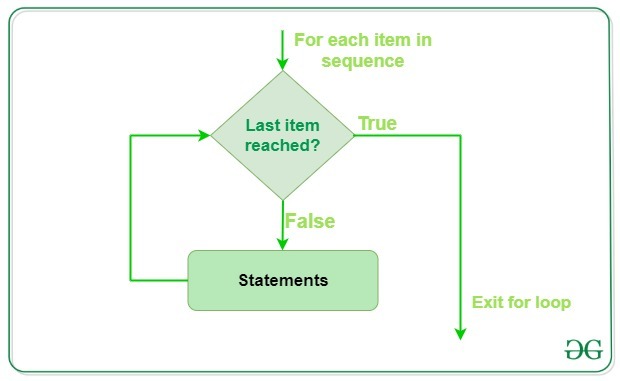
 Python for loops are used for iterating over sequences like lists, tuples, strings and ranges. A for loop allows you to apply the same operation to every item within the loop.
 In this tutorial, you’ll gain practical knowledge of using for loops to traverse various collections and learn Pythonic looping techniques. Additionally, you’ll learn how to handle exceptions and how to use asynchronous iterations to make your Python code more robust and efficient.
 To create a Python for loop, you start by defining an iteration variable and the iterable object you want to loop through. The iteration variable temporarily holds each item from the iterable during each loop. Then, inside the loop, you specify the actions you want to perform using this variable.